

*By Yevhen Brokhin (aka Jæk Bryö), internationally acclaimed art-tech visionary and founder of Collab, creating physical-digital immersive experiences.*
The truth? Old-school marketing is dead.
People see 6,000–10,000 ads a day—and scroll past almost all of them. Our minds have become digital trash cans, overflowing with noise. We live in an age of information overdose, and it’s made us blind.
It doesn’t matter what you’re selling—if you can’t stop the scroll, you can’t make the sale. And most ads? They vanish before they’re even seen.
So, ask yourself: Do you really want your business to end up in that blind zone?
If not—I have the solution.
Imagine a Brand That Draws People In
Now, imagine a brand that creates a space so magnetic that people want to:
Step inside — drawn by curiosity and emotion
Be near it — just to feel part of its energy
Share the experience — because it’s too good to keep to themselves
Shout about it — turning excitement into organic buzz
Tell others in real life — because the impact is real, not digital
This is a reality. It’s called Art Marketing.
Part 1: The Retail Revolution — Stores as Stages
E-commerce is convenient, but physical spaces offer experiences that are unforgettable and invaluable. Progressive brands no longer just build stores—they build stages for immersive storytelling.
Case in Point: Gentle Monster
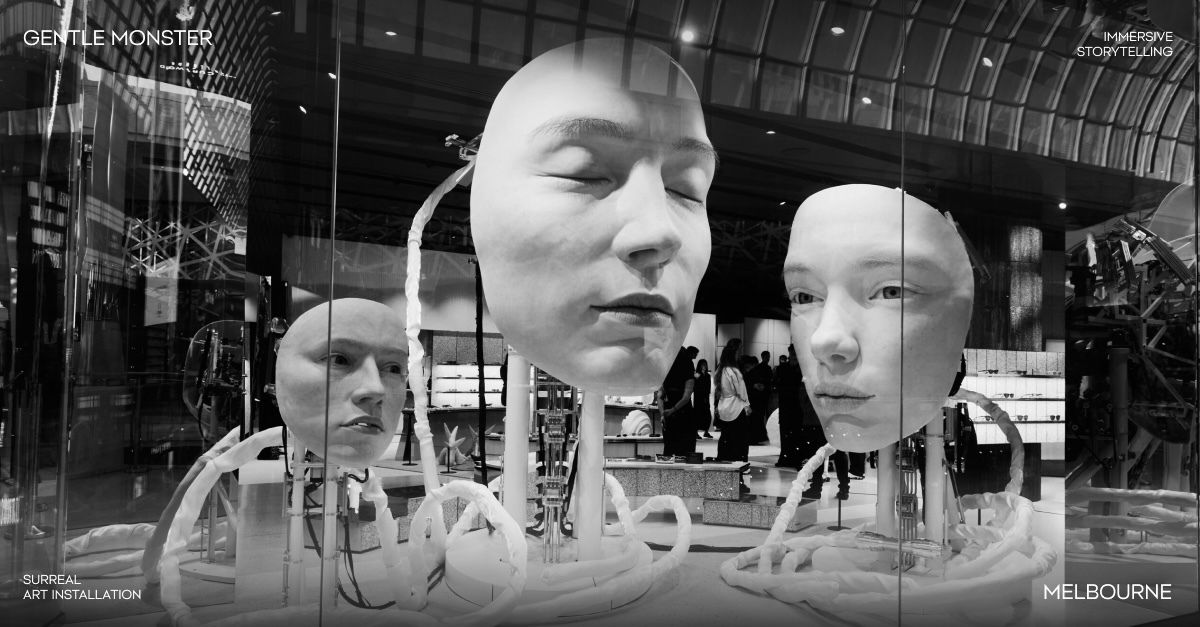
The South Korean eyewear brand was ahead of its time, turning retail spaces into surreal art installations:
Result: Their stores became destinations. Patrons didn’t just buy glasses—they entered worlds of oversized faces, robotic art, and captivating narratives.
Takeaway: When your store is an attraction, you’re selling a memory that carries your brand name.
COLLAB × GENTLE MONSTER — Retail as a Portal
Gentle Monster has always played in its own league—but our collaboration pushed the boundaries further. Together, we created XMJ: The Tree, a three-floor immersive universe built around a gigantic metaphysical tree. This wasn’t a store. This was a psychological journey.
Each level represented a layer of the human mind: consciousness, subconsciousness, and the raw instinctive unconscious.
Visitors walked through generative soundscapes, shifting aromas, adaptive phygital environments, and kinetic installations moving with lidar precision.
The crown of the tree carried a narrative of timeless love.
The subconscious layer grew through living fungal systems in transparent tubes.
The roots pulsed and co-existed with every person entering the space.
XMJ: The Tree turned retail into cinema—a sensory story you walk through, not scroll past. It became a destination, not a store. A memory, not a purchase.
The key takeaway is simple: traditional advertising is no longer enough. To capture attention, build loyalty, and create lasting impact, brands must go beyond products and messages—they must craft experiences that people remember, share, and feel emotionally connected to.
Art Marketing transforms spaces into living stages, where visitors don’t just engage with a product—they become part of the story. Immersive, phygital experiences like XMJ: The Tree demonstrate that when a brand stops being a message and starts being a memory, it achieves something far more powerful than sales alone: it creates organic buzz, emotional resonance, and lasting cultural impact.
In a world overloaded with digital noise, experience is the ultimate currency. The brands that embrace Art Marketing will not just survive—they will lead, inspire, and define the future of engagement.

.jpg)
.jpg)


